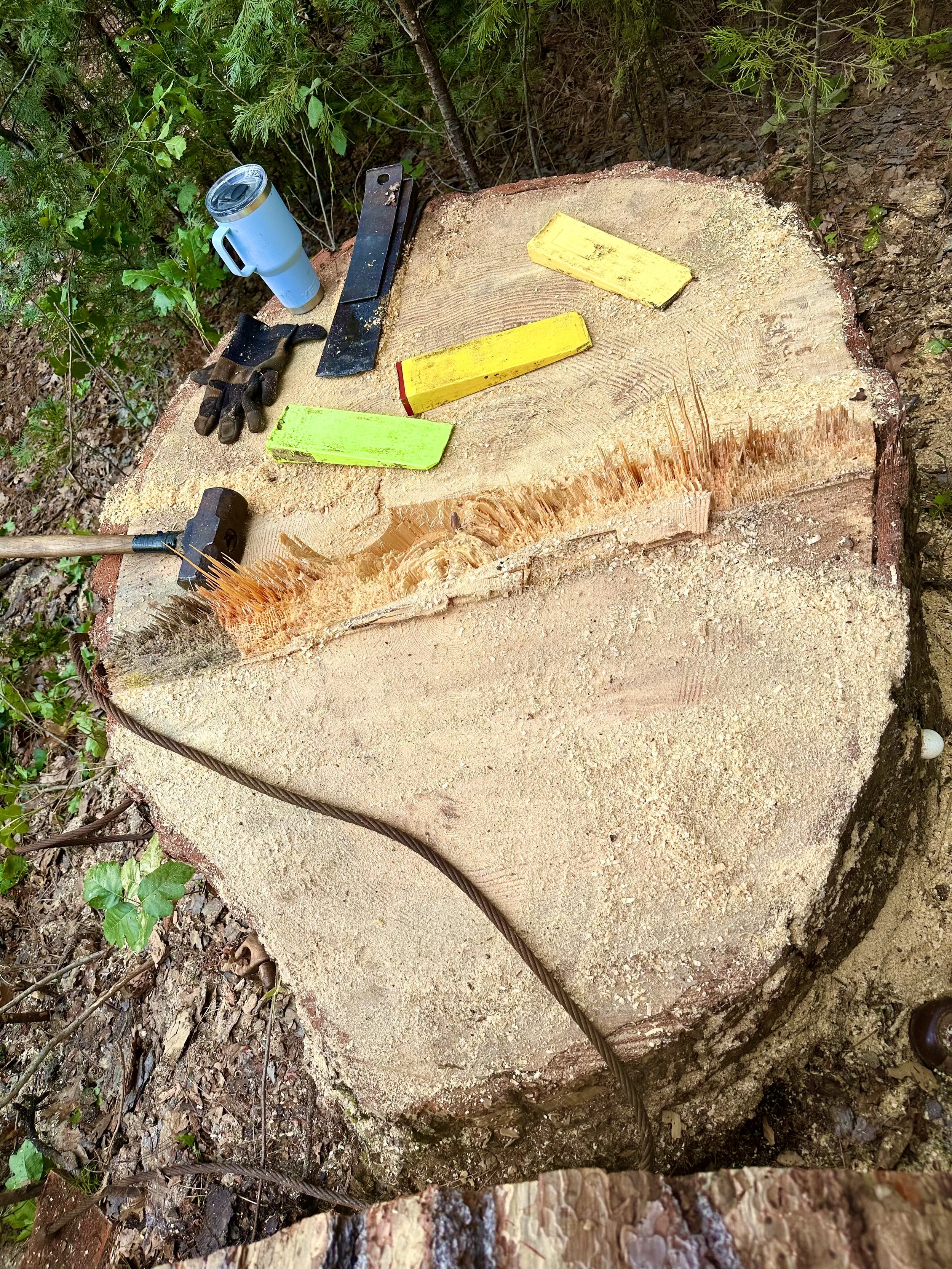
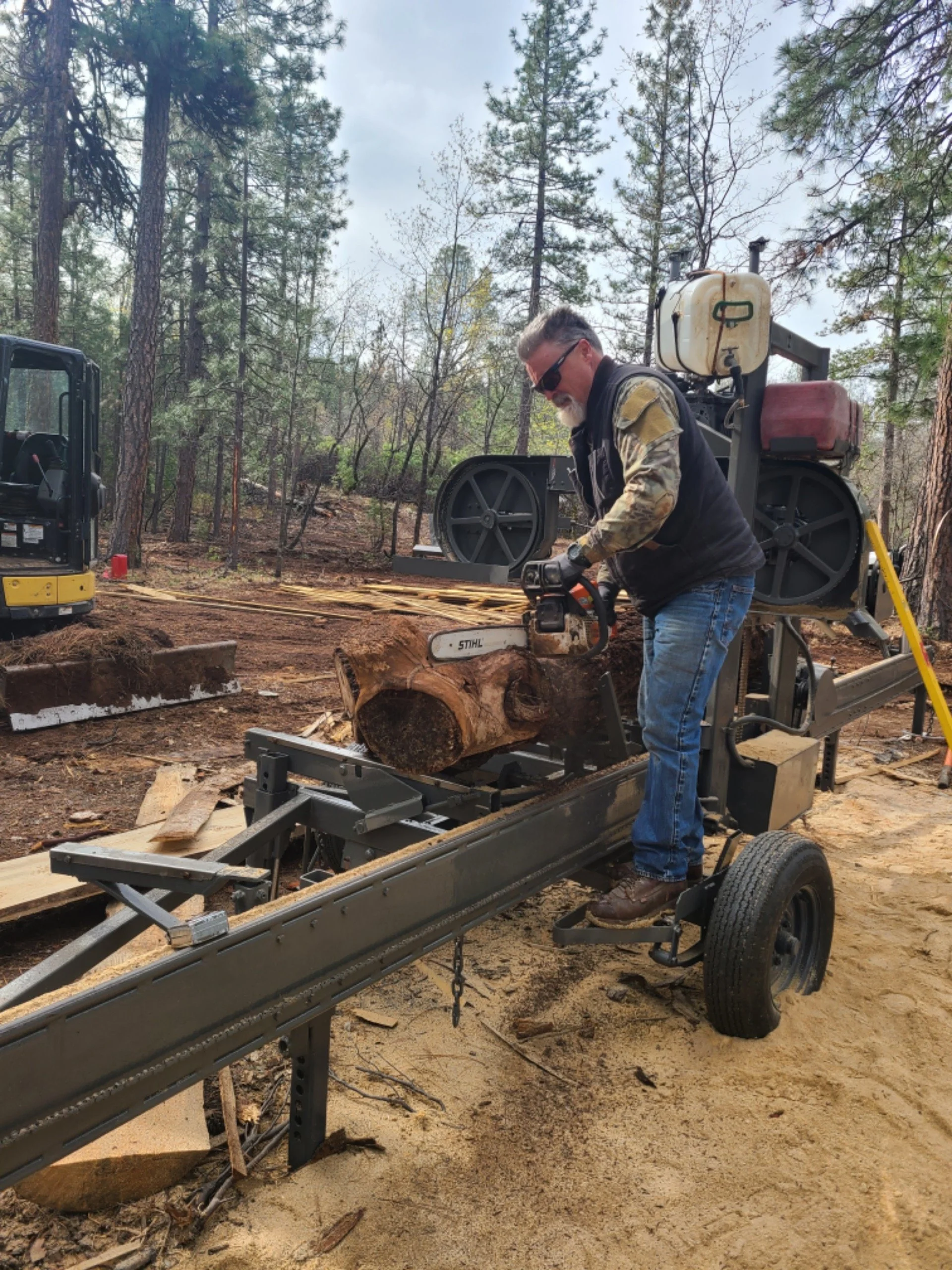
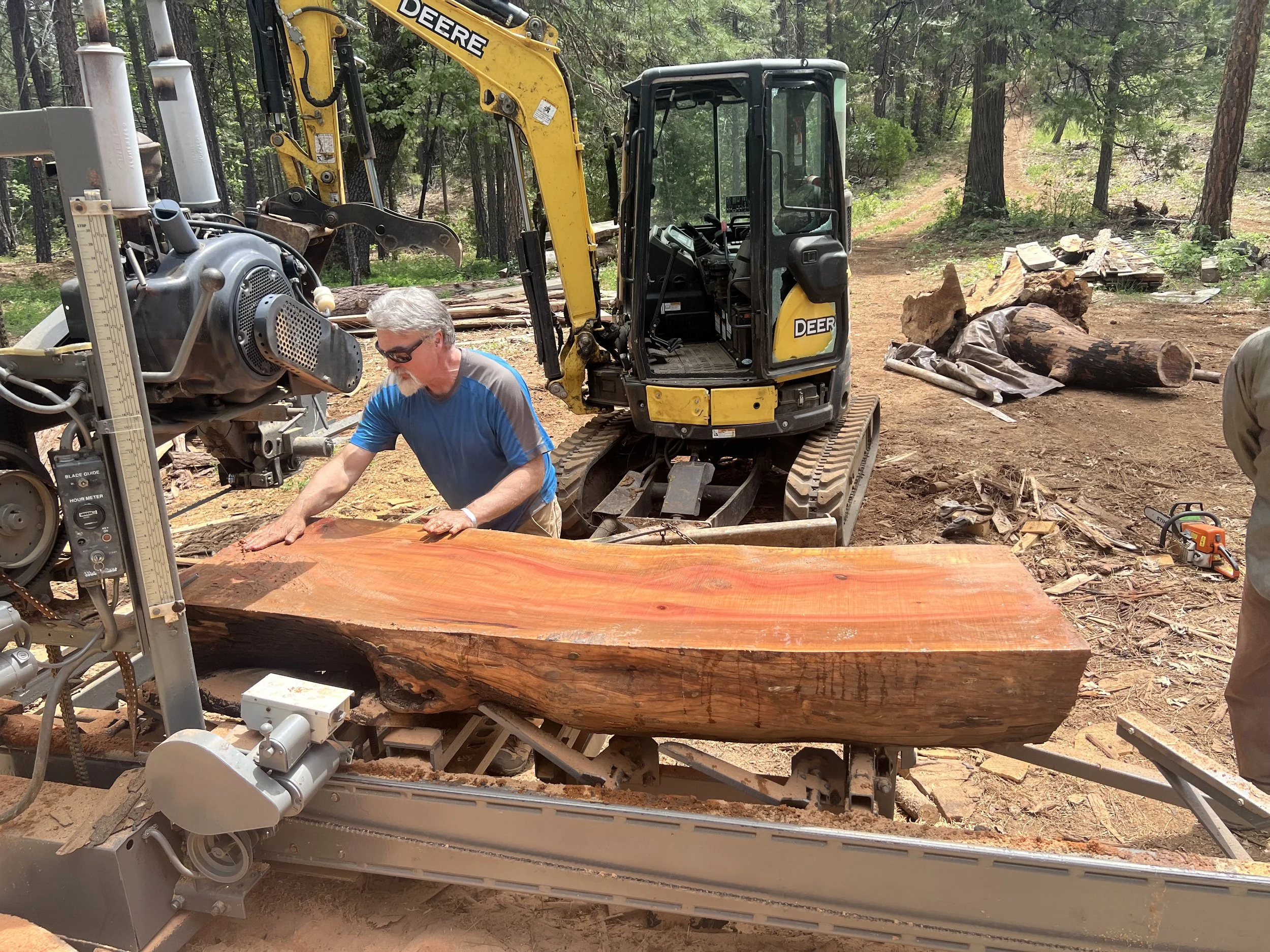
At the core of good forestry, we depend on selective cutting, regeneration, and maintaining soil health and native habitats. Our western dry forests have created a fire habitat that will challenge generations. For now, we source lumber by supporting good foresters, reputable independents, and through the use of deceased trees or those recently affected by wildfires.
This process of honoring the materials we gather is heavily inspired by George Nakashima. We share that same reverence for the natural world and believe he said it best when he stated:
“There is a spirit in trees that is very deep and in order to produce a fine piece of furniture the spirit of the tree lives on and I can give it a second life.”
How we Source Our Materials
A Word on Walnut
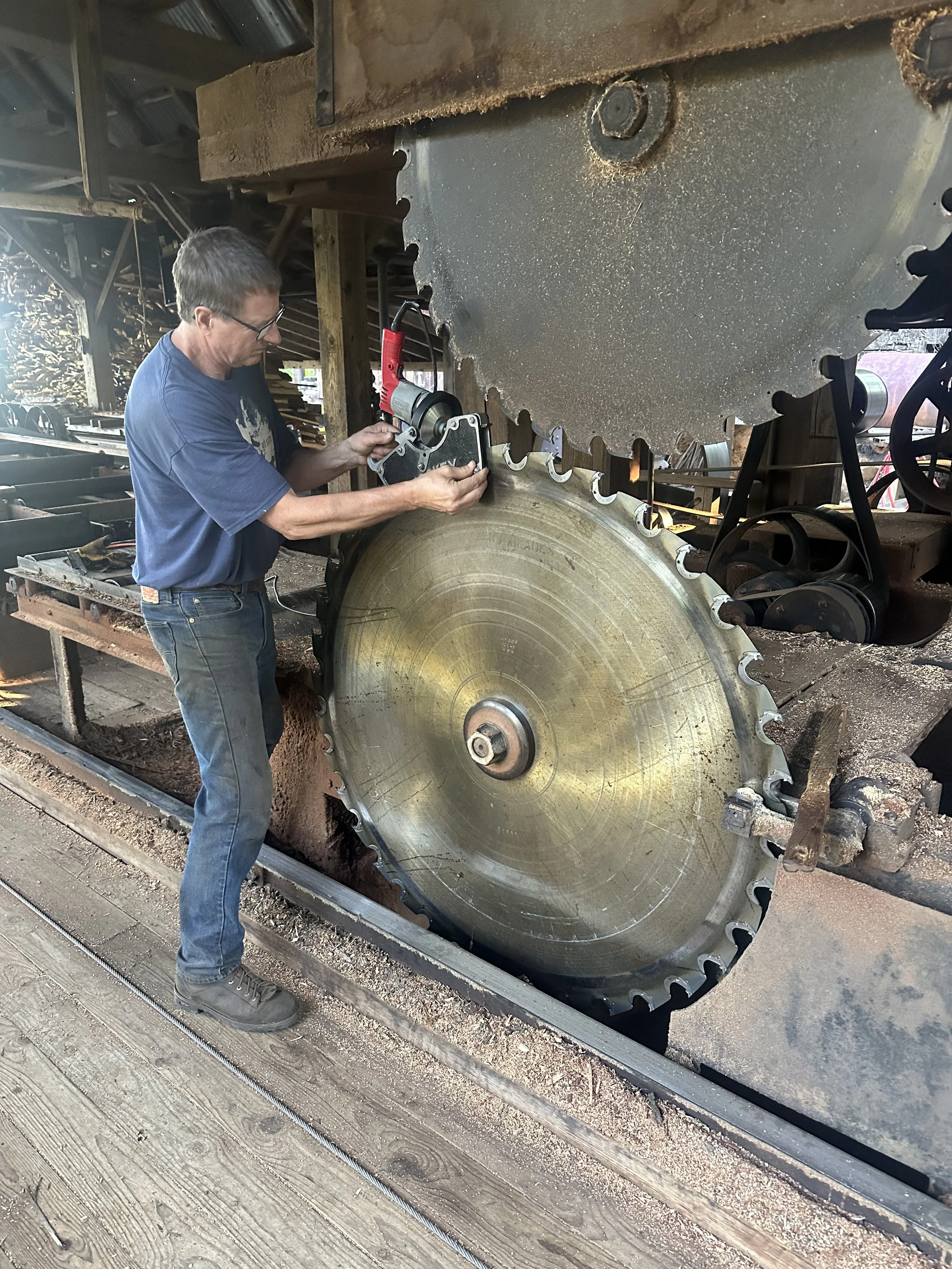
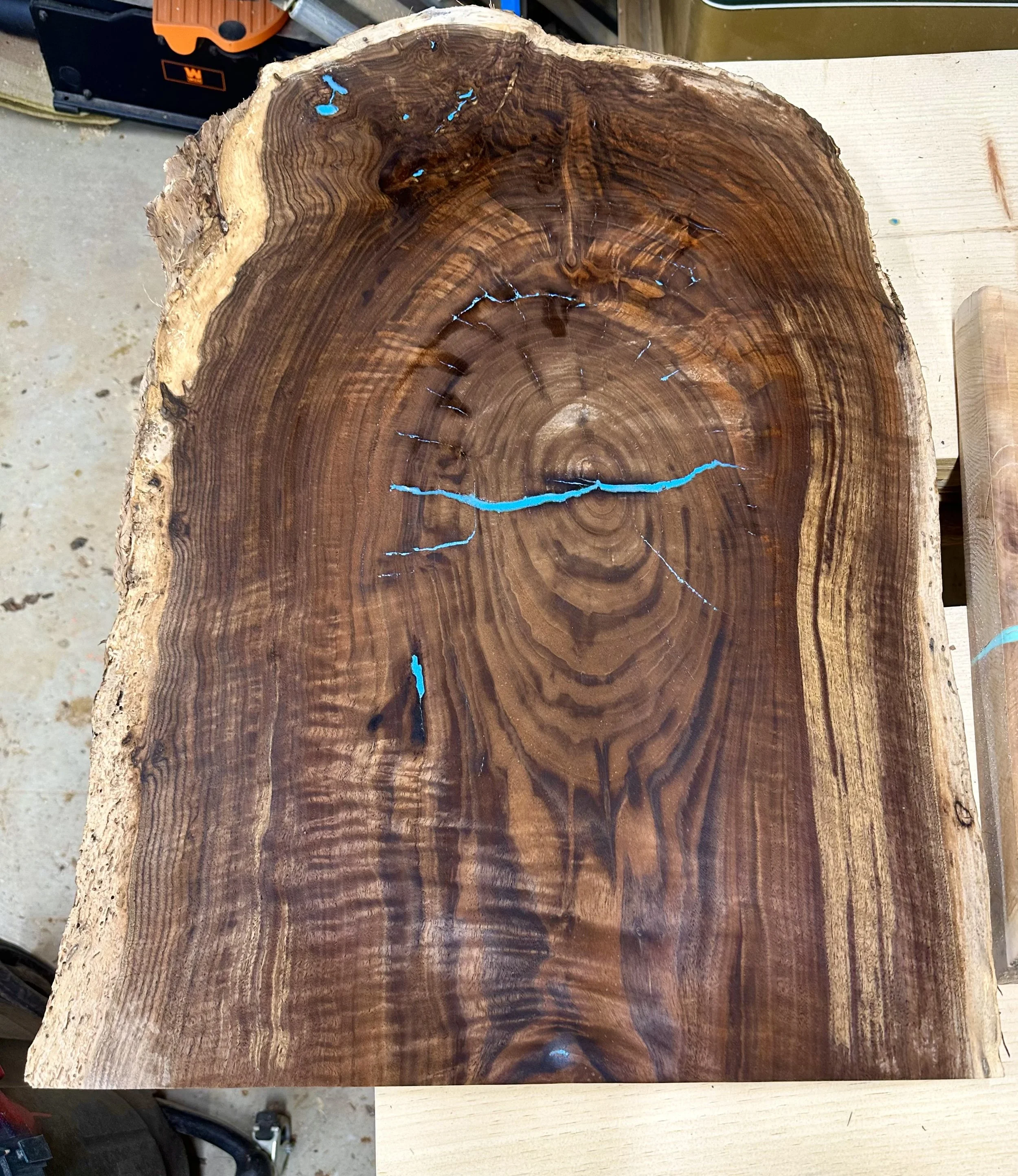
In our dry barn we currently have a large amount of Walnut. We were fortunate enough to acquire this Walnut from an old collection. This 100+ year old walnut was harvested in the 1960s from a large orchard in Big Bend, California. The trees that were harvested were twisted and dead, which has created beautiful patterns within the wood itself. These trees were milled in the Big Valley Mill in Fall River Mills and have been stickered and air-drying ever since.
Orchards like the one harvested from Big Bend were among a plethora of orchards planted in California during the Gold Rush era. They were planted in order to provide the influx of new prospectors with an adequate food supply. These orchards have thus garnered the nickname of “Gold Rush Orchards.”